



15,893
Deliverd orders

Project management is more than just planning tasks and setting deadlines. It is about balancing time, cost, quality and expectations while navigating constant uncertainties. Whether you are managing an academic assignment or a real-life project, you quickly realise that managing the resources and communication is never as simple as it looks just on paper.
In this blog, we are going to explore the most common issues you may face while managing a project. Additionally, we are going to learn different strategies on how to overcome challenges in project management efficiently. In the end, you will have clear approaches at your disposal to solve these future issues.
When you are starting on any project, it is often seen as straightforward. Yet unexpected problems can arise, such as missing deadlines, unclear requirements, team conflicts, and resource shortages. These issues represent common challenges in project management that can effect out comes if not handled properly.
The key difference between the success and failure of analysis is how you can anticipate and respond to these obstacles. Let us have a detailed look at the most frequent ones and how you can manage them efficiently.
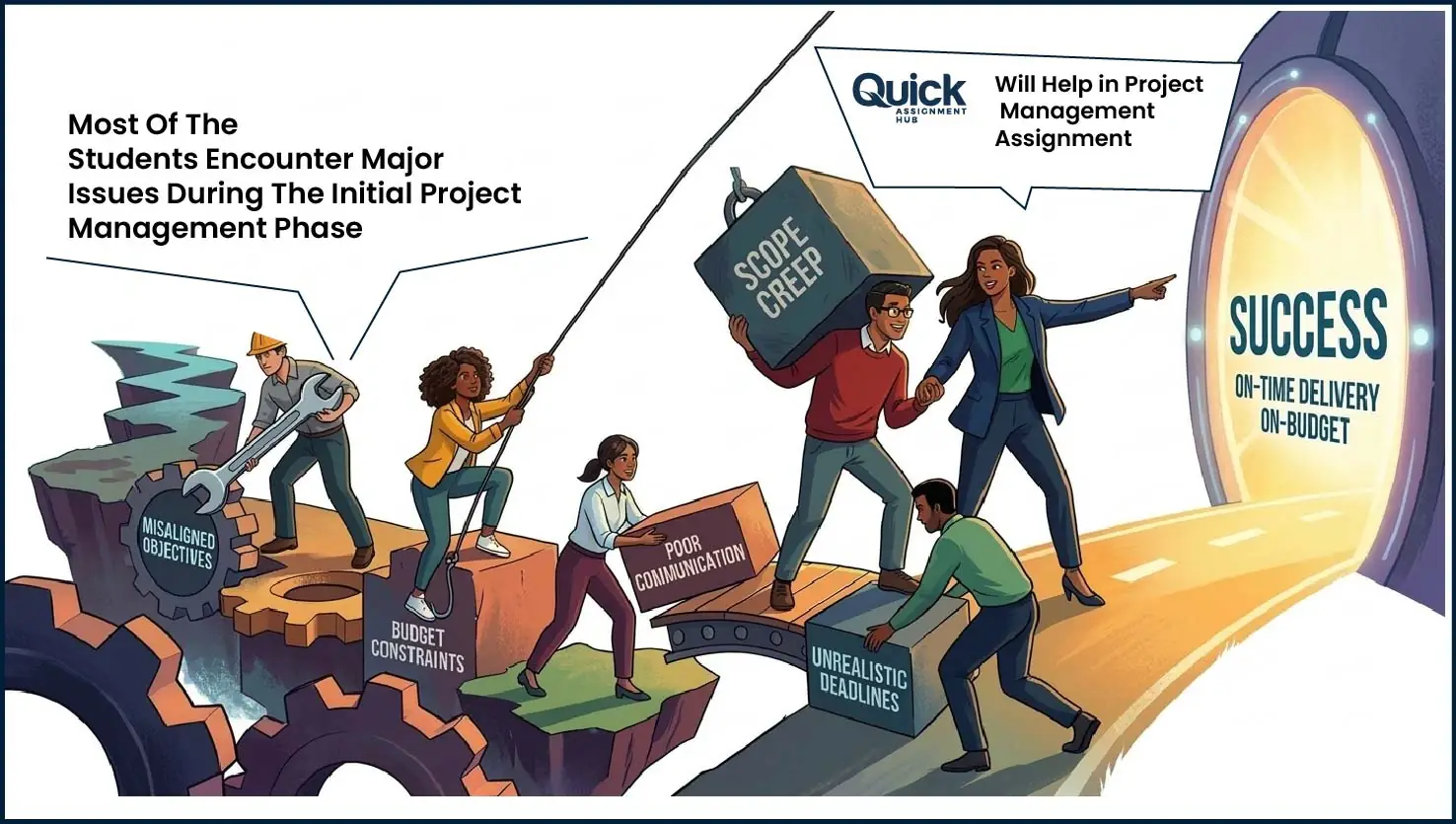
One of the most significant problems in project management is unclear objectives. If you are not sure what the final outcomes should look like, confusion can spread quickly. Scope creep is when requirements expand beyond the original plan, which can derail your progress.
How to overcome it:
Clearly define deliberables at the start.
Break goals into measurable milestones.
Document all requirements before execution.
Politely decline additional tasks that fall outside the agreed scope unless timelines and resources are adjusted.
When you maintain clarity from the beginning, you can reduce mistakes and keep your work aligned with expectations.
Time constraints are one of the biggest project management challenges you may encounter. Deadlines may overlap, tasks may take longer for you than expected, and delays in one stage can affect everything else.
How to overcome it:
Use structured scheduling methods such as the Grantt chart.
Prioritise tasks based on urgency and impact.
Allocate buffer time for unexpected delays.
Track daily progress to stay accountable.
Effective scheduling ensures it is used rather than constantly keeping up.
Miscommunication is one of the challenges in project management that can damage even the most well-planned project. If team members or stakeholders misunderstood the instructions, errors multiply. In an academic context, you may misinterpret assignment guidelines, leading to unnecessary revisions.
How to overcome it:
Establish regular updates or check-ins.
Confirm understanding process summary.
Use written communication for important decisions.
Encourage open discussions to resolve confusion early.
Strong communication creates transparency and prevents minor misunderstandings from becoming major issues.
Limited budgets, insufficient team members or restricted tools can create serious project management challenges. When resources are stretched thin, productivity decreases and stress increases.
How to overcome it:
Identify required resources at the planning stage.
Allocate responsibilities realistically.
Avoid overloading individuals.
Consider digital tools to optimise efficiency.
Resource planning allows you to work smarter and not harder.
Every project involves risk, technical failures, sudden requirement changes, or external factors that can appear from nowhere. Ignoring risk does not eliminate them; it only makes it harder to manage later.
How to overcome it:
Conduct a risk assessment before starting.
Identify potential threats and their impacts.
Develop a contingency plan.
Monitor risks throughout the lifecycle.
Proactive thinking helps you to stay prepared instead of staying reactive.
Without a structured plan, your execution begins inconsistently. Many challenges in project management arise because planning is rushed or incomplete.
How to overcome it:
Define objectives clearly.
Develop a timeline with checkpoints.
Assign roles and responsibilities.
Monitor and adjust the plan as needed.
Remember that planning is not just about a one-time task, but evolves as your project progresses.
If you are working in a group, differences in work style or expectations may create tension. Low motivation can slow down your progress and affect overall performance.
How to overcome it:
Clarify roles to avoid overlap.
Encourage accountability.
Recognise achievements.
Address disagreements professionally and early.
These are some of the crucial tips for management assignment writing, as a motivated and cooperative team can dramatically improve outcomes.
Technology can simplify a complicated process. Using suitable project management software programs helps you to organise task track deadlines, and collaborate effectively. However, selecting the wrong tool can create additional confusion.
How to overcome it:
Select user-friendly platforms.
Ensure the tool aligns with your project size and complexity.
Provide basic training before implementation.
Use features like task tracking and progress reports.
Some of the most used project management software programs are Monday work management, Asana, Wrike, Trello, Smartsheet and ClickUp. These tools are user-friendly and beginner-friendly. Selecting the correct software can increase visibility and control over your work.
Tracking performance is as important as planning. Without monitoring, you may not realise you are off track until it is too late.
How to overcome it:
Set measurable performance indicators.
Conduct regular progress reviews.
Compare planned vs. actual outcomes.
Adjust strategies immediately when deviations occur.
Tracking performance is as important as planning. Without monitoring, you may not realise you are off track until it is too late.
How to overcome it:
Set measurable performance indicators.
Conduct regular progress reviews.
Compare planned vs. actual outcomes.
Adjust strategies immediately when deviations occur.
Change is inevitable, whether it is updated requirements or unexpected circumstances; adaptability is a crucial skill in project management.
How to overcome it:
Stay flexible and solution-oriented.
Communicate changes clearly to everyone involved.
Revise timeliness and deliberations transparently.
Maintain documentation of updates.
Flexibility combined with structure control helps you to stay resilient.
We present you with a step-by-step structure to overcome crucial challenges while managing a project.
Define Clear Objectives.
Create a Realistic Plan.
Allocate Resources Wisely.
Communicate Constantly.
Monitor Performance Regularly.
Adapt Quickly When Needed.
By applying the steps systematically, you can reduce uncertainty and increase your chances of success. In case you need a helping hand, you can also take assignment help to solve your issues and structure your project.
Strong project management skills benefit you academically and professionally. You learn discipline, organisation, risk awareness and leadership abilities. These competencies are highly valued in every industry.
When you understand and address project management challenges, you can become more confident in managing complicated responsibilities. Over time, you can notice improvement not only in results but also in stress levels and time efficiency.
Managing a project successfully requires more than technical knowledge. It demands planning, communication, flexibility and consistent monitoring. When you understand the common project management challenges and apply practical solutions, you can get control over the outcomes instead of reacting to problems.
When you are in need of professional writing, simply opt for Quick Assignment Hub services without any doubt. Our Management Assignment Help services offer you complete help on crafting excellent projects. Whether it involves a risk assessment or a grant chat, we do everything.



© Copyright Quick Assignment Hub All rights reserved.