



15,893
Deliverd orders

The PTLLS qualification is one of the most searched entry-level teaching qualifications connected with the UK education and training sector. People who aspire to become teachers, tutors, or trainers for adults in further education often search for this route before choosing a teacher-training course.
However, students should know one important update: the PTLLS qualification has now been replaced by the Level 3 Award in Education and Training, often called AET. Many course providers still mention PTLLS because learners continue to use the old name while searching online.
Before signing up for a course, many students first look into what is PTLLS qualification and whether it suits their long-term career goals. Candidates may figure out whether this teaching route fits their professional aspirations by learning what it covers, who it is for, and how it supports entry-level teaching roles.
The online option for the PTLLS qualification online route has also made it easier for students who want to study in a flexible way. People now see the PTLLS qualification as a useful starting point for professional teaching and training roles.
The official name of PTLLS is Preparing to Teach in the Lifelong Learning Sector. When students ask what is PTLLS qualification, the simple answer is that it was an introductory teaching certificate for people who wanted to teach or train adults in further education, community learning, private training, or workplace learning environments.
Today, the updated version is generally known as the Level 3 Award in Education and Training. It covers similar foundation-level teaching skills, such as planning lessons, understanding learner needs, using assessment methods, and creating an inclusive learning environment. The teaching qualification PTLLS helped learners build confidence in:
Lesson planning
Teaching delivery
Learner engagement
Assessment basics
Classroom communication
Inclusive teaching practice
Professional teaching responsibilities
For international students in the USA researching UK teaching routes, it is useful to understand both names: PTLLS is the older term, while AET is the current qualification name used by many providers.
More and more working professionals choose the PTLLS qualification online route because it allows flexible study. The online style lets learners study theory-based units without attending a physical classroom every day. Many students choose the online path because it can support:
Self-paced study
Remote learning
Flexible scheduling
Access to digital learning materials
Tutor guidance is available
A practical route for career changers
Even though the PTLLS qualification online option is flexible, students should still check the course provider, awarding body, assessment method, and teaching-practice requirements before enrolling.
Online learning can be helpful, but students should avoid assuming every online course has the same recognition. Always check whether the course is mapped to the current Level 3 Award in Education and Training.
One of the most common questions is what can you do with a PTLLS qualification. Since PTLLS was an entry-level teaching route, it could support learners who wanted to begin teaching or training adults in post-16 or lifelong-learning settings. Students who complete the updated AET route may explore entry-level roles such as:
Trainee teacher
Adult education tutor
Workplace trainer
Private training instructor
Teaching assistant
Community learning tutor
Vocational training support staff
Further education support role
When researching what you can do with a PTLLS qualification, students should remember that job requirements vary by employer, country, institution, and subject area. Some roles may require additional teaching experience, subject qualifications, safeguarding training, or higher-level teacher-training credentials.
The qualification can also help learners decide whether they want to progress to higher education and training awards, such as certificate-level or diploma-level teaching qualifications.
One of the most important questions is how long the PTLLS qualification lasts. In most cases PTLLS certificate itself does not usually expire in the same way a short professional license might. However, because PTLLS has been replaced by AET, learners should check whether their employer, training provider, or awarding body accepts the old certificate. The answer to how long does PTLLS qualification last depends on:
When the certificate was awarded
Whether the employer still recognizes PTLLS
Whether the learner needs the newer AET
Whether the role requires updated training
Whether higher teaching qualifications are needed
Students asking how long does PTLLS qualification lasts should also consider professional development. Even if an old certificate is still recognized, teaching methods, safeguarding expectations, digital learning tools, and assessment practices change over time.
That is why many learners now choose the current Level 3 Award in Education and Training instead of searching only for the old PTLLS route.
PTLLS was replaced to modernize entry-level teaching preparation and align it with updated education and training standards. The current Level 3 Award in Education and Training is widely described as the replacement for PTLLS.
The updated qualification keeps the foundation-level teaching purpose but uses a newer structure and current terminology. This helps learners understand teaching responsibilities in a more modern lifelong-learning environment.
The change matters because students may still find older course names online. When comparing course pages, check for phrases such as:
Formerly PTLLS
AET replacing PTLLS
Level 3 Award in Education and Training
Preparing to Teach in the Lifelong Learning Sector
Introductory teaching qualification
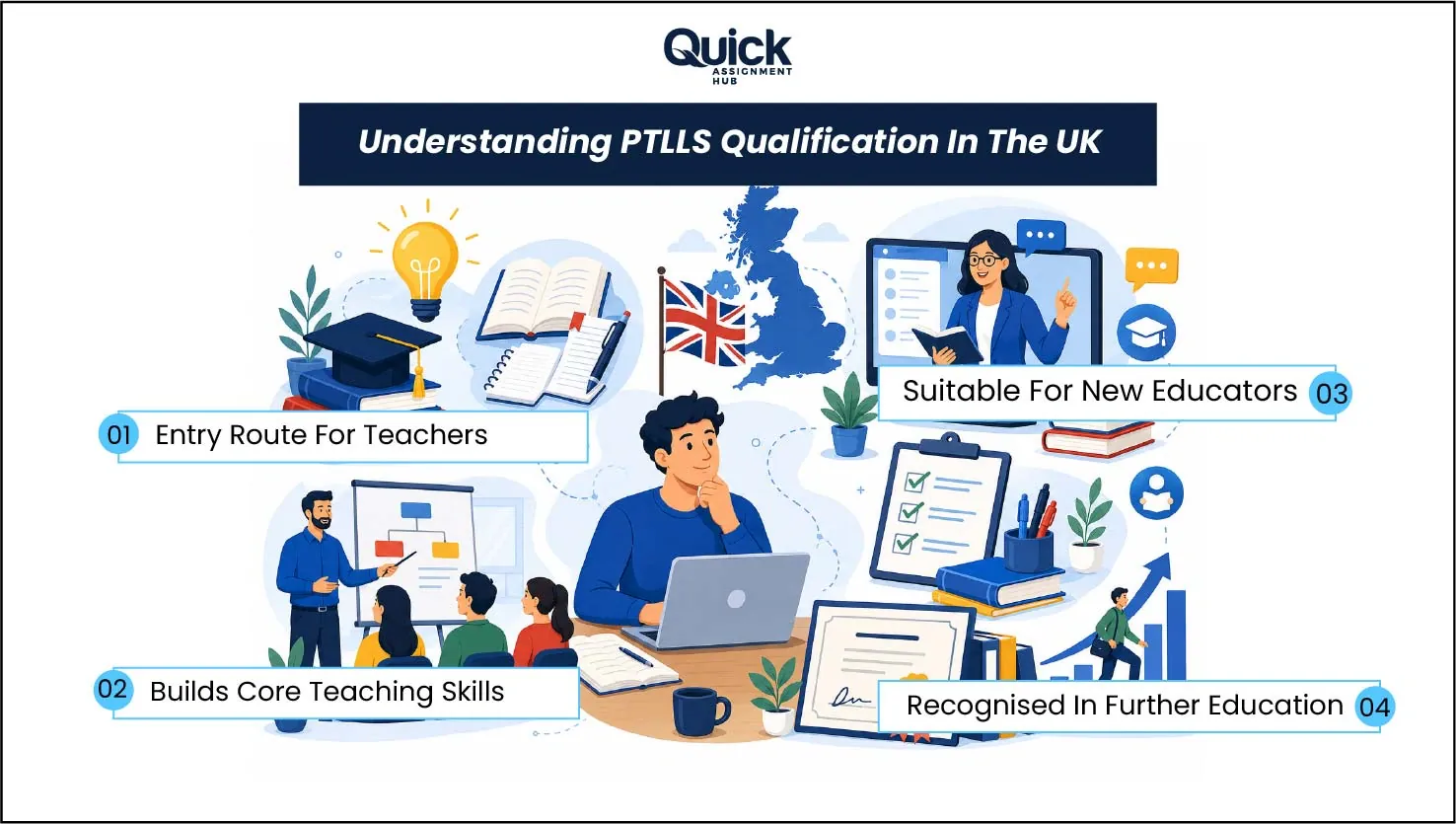
The PTLLS qualification helped learners understand the basic responsibilities of teaching adults. The current AET route continues to focus on similar foundation skills. Students may learn how to:
Plan lessons for adult learners
Use inclusive teaching methods
Create learning aims and outcomes
Manage learner participation
Choose assessment methods
Give constructive feedback
Reflect on teaching practice
Understand teacher responsibilities
Communicate professionally
Support different learning needs
These skills can help students become more confident in training, tutoring, mentoring, or workplace learning roles.
After getting their PTLLS qualification, many students go on to higher teaching or training qualifications. Since PTLLS has now been replaced, learners may continue through the AET route and then explore certificate-level or diploma-level teaching pathways where suitable. Common progression options may include:
Level 3 Award in Education and Training
Level 4 Certificate in Education and Training
Level 5 Diploma in Education and Training or related updated routes
Assessor qualifications
Internal quality assurance qualifications
Subject-specific teaching development
Workplace training certifications
Knowing what you can do with a PTLLS qualification can help students plan their next step more clearly. Some learners may use it for entry-level teaching confidence, while others may treat it as the first step toward a longer teaching career.
Students writing about teacher training, adult education, lifelong learning, or UK education policy may need help organizing their ideas. Quick Assignment Hub can support students with academic guidance, proofreading, editing, referencing, and structure review. Students can explore related support such as:
Assignment Help for education and training topics
Essay Writing Help for Reflective Teaching Essays
Research Paper Help for education policy or lifelong-learning research
Homework Help for short academic tasks and weekly submissions
These services are meant to support learning, structure, clarity, and academic confidence. Students should always follow their institution’s academic-integrity rules.
The PTLLS qualification is still widely searched, but learners should know that it has generally been replaced by the Level 3 Award in Education and Training. If you are planning to teach adults, train employees, or begin a career in further education, understanding the old and new qualification names is important.
The updated AET route can help learners develop basic teaching knowledge, lesson-planning skills, assessment awareness, and confidence in adult-learning settings. Students should compare course providers carefully and confirm recognition before enrolling.
If you are writing an academic paper on what can you do with a PTLLS qualification, online teacher training, or UK lifelong-learning routes, Quick Assignment Hub can help you improve structure, research clarity, referencing, and academic presentation.








© Copyright Quick Assignment Hub All rights reserved.