




15,893
Deliverd orders


A well-developed research proposal is the first and most important step in any academic research journey in the UK. Whether you are preparing for a dissertation, master's project, or PhD application, your proposal outlines what you plan to study, why it is significant, and how you intend to conduct the research. It reflects your subject knowledge, analytical skills, and readiness for independent academic work.
Now the important question arises: How do write a research proposal? We are going to answer that with this UK university-focused guide. Explore the key elements for writing a clear, structured proposal. This blog will help you to prepare for a strong academic document.
The purpose of a proposal is to present a clear and feasible plan for your intended study. It showcases to your professor or admissions panel that your research idea is academically valuable and achievable within the given time frame. In the UK universities, the research proposal guide is based on:
Clarity of the Research Problem.
Evidence of Literature Awareness.
Define Aims and Objectives.
Appropriate Methodology.
Consideration of Ethical standards.
Your proposal should not present findings. Rather than that, it should outline a structured plan explaining how you can carry out your research and why it deserves approval.
Choosing a focused research proposal topic is necessary. Broad topics often lead to vague research questions and weak methodology. You should narrow your Idea by identifying a specific issue within your field. Consider the following when refining your topic:
Is the research manageable within your timeframe?
Does it address the clear academic gap?
Is it relevant to the UK context if required?
Are sufficient academic sources available?
For example, instead of writing a research proposal on “Digital marketing,” you should focus on topics like “The influence of influencer marketing on purchasing behaviour among UK Gen Z consumers”. Reviewing a structure sample from your university sources can help you refine your topic effectively.
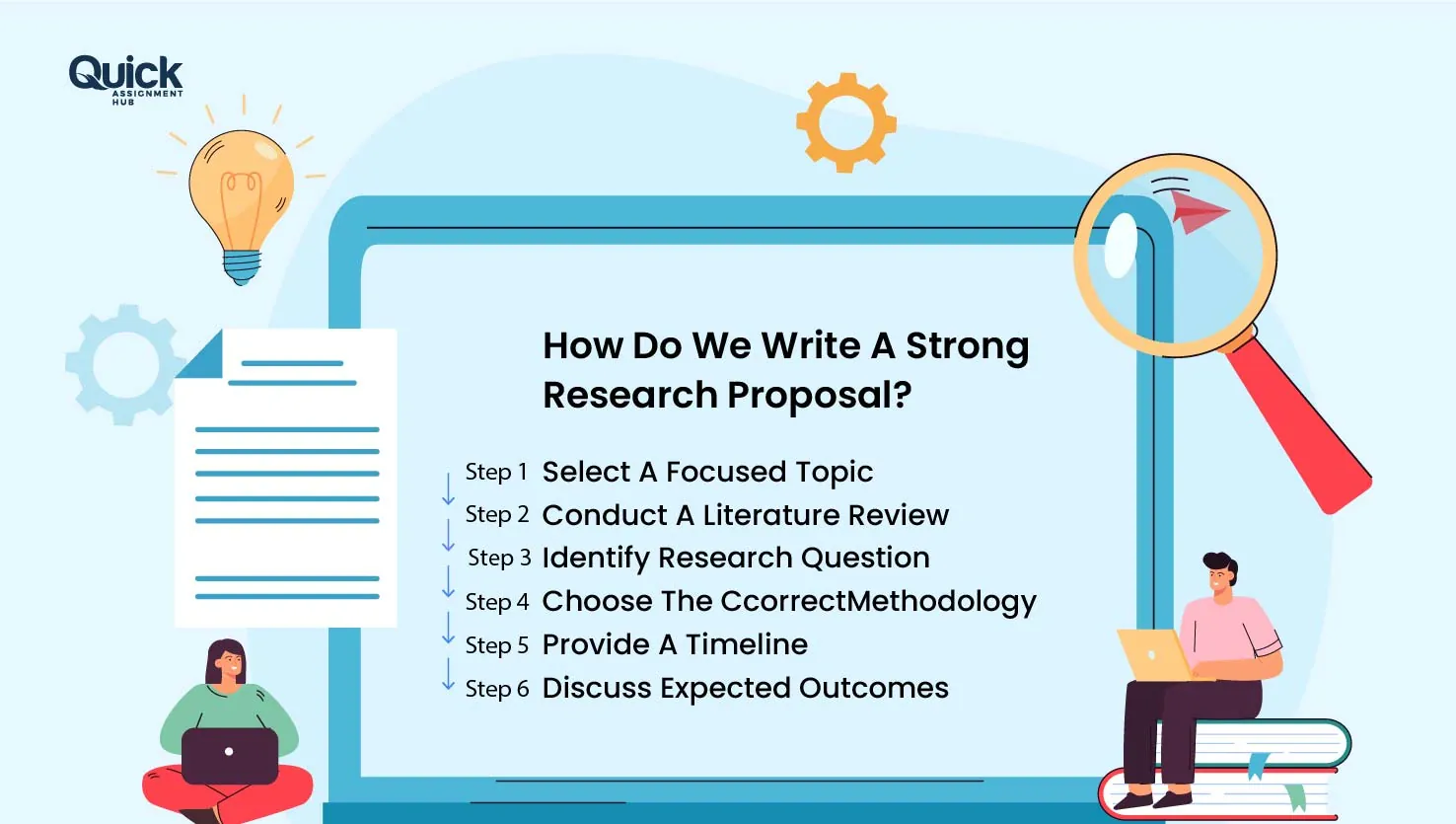
Writing a proposal requires time, patience, and extensive research; hence, you need to go step-by-step to keep it simple and manageable.
Title
Your title should be clear, concise, and directly aligned with your research question. Avoid using any vague language and ensure it reflects the scope of your study.
Introduction and Background
The core of how to write a research proposal starts by providing a context for your research. Explain the border issue, highlight key debates, and justify why your study is important. Use recent academic sources to show awareness of current discussions.
Literature Review
The literature review shows your understanding of existing research. Compare findings, identify patterns, and highlight gaps. This shows your ability to engage with academic debate and position your research within it.
Research Aim and Objectives
Your aim is a brief statement that describes what your study intends to achieve. The objectives break down the aim into smaller, measurable steps.
For example, aim: “The aim of this study is to investigate the influence of influencer marketing on the purchasing behaviour of UK Gen Z consumers”.
Objectives:
To examine the influence of influencer marketing on UK Gen Z’s purchasing behaviour.
To analyse the impact of influencer marketing on brand purchasing.
Clear objectives provide direction and structure.
Research Question or Hypothesis
Your research question must align directly with your aim and objectives. It should be precise and researchable. Many of you ask how do you write a research proposal with strong research questions. The key is to ensure your question is specific, focused, and achievable within the limits of your project.
For example,
What is the impact of influencer marketing on brand purchasing?
Research Methods
The methodology section is a central component of your proposal. It explains how you can collect and analyse data. You should include:
Research Design (Qualitative, Quantitative, or mixed).
Data Collection Methods (Interviews, Surveys, or Case studies).
Sampling Approach.
Data Analysis Techniques.
Ethical Considerations.
Your research proposal guide for the assignment may mention any specific methods to include; make sure you check it out before you start writing. UK universities play strong emphasis on research ethics. If you involve participants, you must address informed consent, confidentiality, and data protection under GDPR.
Timeline
Provide a realistic schedule outlining the key stages, like literature review, data collection, analysis, and writing. A clear timeline shows planning feasibility.
Reference List
Your reference list must follow the required style of Harvard or any specific style if mentioned. Ensure your sources are credible ans not older than 5 years, and are properly cited.
Through this step-by-step approach on how to write a research proposal, you can craft a proposal that catches the attention of your professors and increases the chances of approval.
Following the correct format makes sure that your work meets the institutional expectations. Although specific requirements may change depending on the individual university, most of the UK universities follow a research proposal format with:
Formal Academic Tone.
Structure Headings and Subheadings.
Consistent Referencing.
Logical Organisation.
The research proposal format may also follow Times New Roman, 12-point font, clear spacing, and a Harvard citation style. However, it can also change depending on the type of research, hence always check your university handbook before submission.
Clarity is the top priority when you are writing a proposal. Avoid overly complicated language and ensure that your arguments flow logically from one section to another. To improve clarity:
Keep the paragraphs focused on one idea.
Use transition phrases for smooth flow.
Support claims with academic evidence.
Proofread for grammar and coherence.
Clear academic writing strengthens the overall impact for you while writing a research proposal and reflects confidence in your research plan.
Many mistakes can weaken your proposal. Some of the common mistakes are listed below. Be careful not to:
Select a topic that is too broad or too narrow.
Present unclear or inconsistent objectives.
Provide vague methodological explanations.
Ignore ethical consideration.
Use outdated academic sources.
Skipping review and proofreading your research proposal.
Treating your proposal like a complete dissertation.
A strong proposal provides direction for your entire research project. It acts as a roadmap helping you to stay focused and organised throughout your dissertation or thesis.
When your professor checks your research proposal to examine your academic capabilities, they might wonder how do you write such a well-written and to-the-point proposal. It showcases your academic capability through critical thinking, planning skills, and understanding of research standards. A clear and structured proposal increases your chance of approval and lays the groundwork for successful research.
Preparing a comprehensive research proposal requires careful planning, structured thinking, and attention to detail. By selecting a focused topic, following the UK academic standards, and presenting it in a realistic methodology, you can create a strong foundation for your research journey.
If you need a professional assistant for your research, then Quick Assignment Hub is with you. Our Research Proposal Help services make sure to develop clear and confident proposals with quality research. We follow the UK university requirements precisely to secure the best marks.
Your First Order
Get 20% OFF!




















© Copyright Quick Assignment Hub All rights reserved.


