




15,893
Deliverd orders

Human resource management students often work on CIPD assignments. But do you know what CIPD is all about? Well, it stands for the Chartered Institute of Personnel and Development, which is a UK-based professional organisation that supports HR professionals, learning specialists, and people managers. The aim of CIPD is to improve workplace practices and organisational performance.
As an HRM student, your assignments demand not just facts and information but also robust evidence and critical thinking, which must be demonstrated in writing. Here comes the PEEL paragraph technique into play. PEEL helps HR students to organise ideas and information in cohesive paragraphs. If you are struggling with PEEL or you have just been introduced to it, get to know how you can use PEEL in CIPD assignment analysis here.
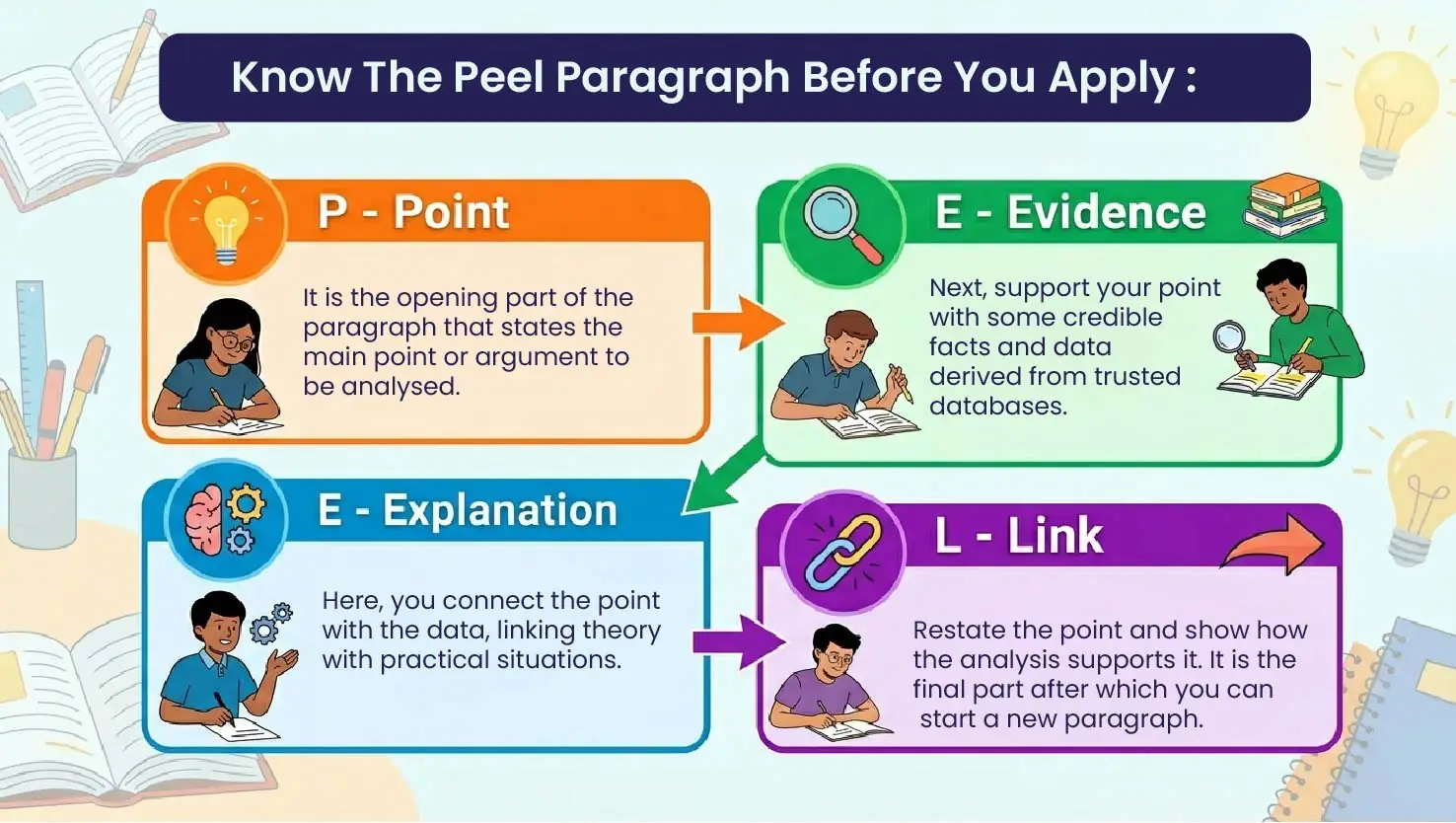
In academic writing, structure is one of the most important aspects of grading criteria, as assessors are checking numerous assignments daily. Therefore, most look for writings that are organised into clear and logical paragraphs. PEEL is such a writing technique that stands for Point, Evidence, Explanation, and Link. Here, the Point presents the main idea of the paragraph, stating the question and topic. The Evidence covers the important facts, examples, and references that must support the topic. Next, there is an explanation that explains the why and how, analysing the topic. Lastly, the Link connects the assignment question to the paragraph. The PEEL paragraph technique makes writing more structured and persuasive.
CIPD assignments often require theoretical analysis, proper research, and workplace examples, which you cannot miss. You cannot present theories, policies, and examples haphazardly, as it may come across as vague and lead to misinterpretation by assessors. Moreover, CIPD grading depends on the application of HR theory and models, real workplace examples, and clear writing. The PEEL paragraph technique helps meet these requirements in a structured way. It assists in building logical and well-supported paragraphs that pack a punch.
In CIPD assignments, the PEEL paragraph structure adds clarity, logic, and evidence-based discussion without sounding repetitive and too descriptive. Here, we have shown you with examples on how to use PEEL paragraphs in CIPD assignments. If you are still struggling, get our CIPD assignment help today. The steps are:
The point in the peel paragraph structure puts forward the statement that the paragraph will discuss. It highlights the main idea or the argument, ensuring it is linked to the CIPD assignment question. The point usually appears in the first sentence of the paragraph. It is best to focus on one idea per paragraph and make it more analytical rather than descriptive. You can start with phrases like “ a key aspect to consider is”, “ one important factor is”, and more. A short example to state the point in the CIPD topic on employee engagement:
Employee engagement plays an important role in improving organisational performance and business output.
Here, as you can see, the stage is set for further discussion on why employee engagement is important, as it front-loads the main argument for deeper CIPD discussion.
Any point is invalid until it has proper evidence to support it. In the PEEL paragraph technique for CIPD assignments, evidence plays a significant role in writing. It supports the point with reliable information, answering the question “ What proof and information do I have for this particular point?” In CIPD assignments, you can get credible evidence from HR theories, leadership models, industry data from the Chartered Institute of Personnel and Development, real organisation examples, and industry statistics. You must keep the citation style in mind while referring to the sources, which can start like “ According to”, “ Studies suggest that”, and more. An example of evidence goes like:
“ A survey report by the Chartered Institute of Personnel and Development highlights that organisations with high levels of employee engagement have stronger employee commitment and increased productivity”.
Explanation in a PEEL paragraph structure for CIPD is where the real discussion and analysis take place. It answers the questions as to “ why” and “ how”. Why does the present point matter? How effectively does it relate to the human resource policies? and related questions. A hallmark of a strong CIPD assignment is bridging theory and practice. Explanation does not repeat the evidence but dissects it to prove the point. One of the Peel paragraph methods to write an explanation for CIPD assignments is:
“ This shows that engaged employees stay more motivated, committed, and productive in the workplace. When employee truely feel valued and are more passionately connected to organisational goals, they show discretionary effort and lead to greater outcomes. As a result, the organisations benefit from lower absenteeism and higher productivity.” This explores CIPD in depth, along with the implications.
The “ Link” in the PEEL paragraph technique reinforces the main points of the paragraphs, connecting them all back to the main argument and question. It binds everything together so that your paragraph does not fall into fragments, providing cohesion. You can start the sentence with “ Therefore”, “ This demonstrates that”, and “ Consequently”, summarising the point, evidence, and the explanation together. This shows that your CIPD writing is a unified whole, maintaining logical flow and transition. A Link in PEEL paragraph methods looks like:
“Therefore, strong leadership communication plays an important role in enhancing employee engagement. It highlights the significance of supportive management practices, maintaining good workplace relationships, which eventually play a significant role in organisational growth”.
The PEEL technique is a breakthrough in CIPD assignments, helping students structure their analysis effectively. Instead of just describing HR policies and procedures, PEEL explains concisely why the topic matters and how it is relevant to the current HR landscape. Moreover, the biggest benefit is that PEEL helps you meet the assessment criteria in CIPD, which depends on knowledge, application, and evaluation. Hopefully, in this blog, you will get to know how to use PEEL paragraphs in CIPD assignments and how you can improve your analysis. If you still feel the need for an assignment expert for CIPD assignment writing, connect wth our team at Quick Assignment Hub today. Here, we have experts who are familiar with CIPD modules for all levels, including levels 3, 5, and 7. Get assistance today.
Your First Order
Get 20% OFF!

















© Copyright Quick Assignment Hub All rights reserved.


