




15,893
Deliverd orders

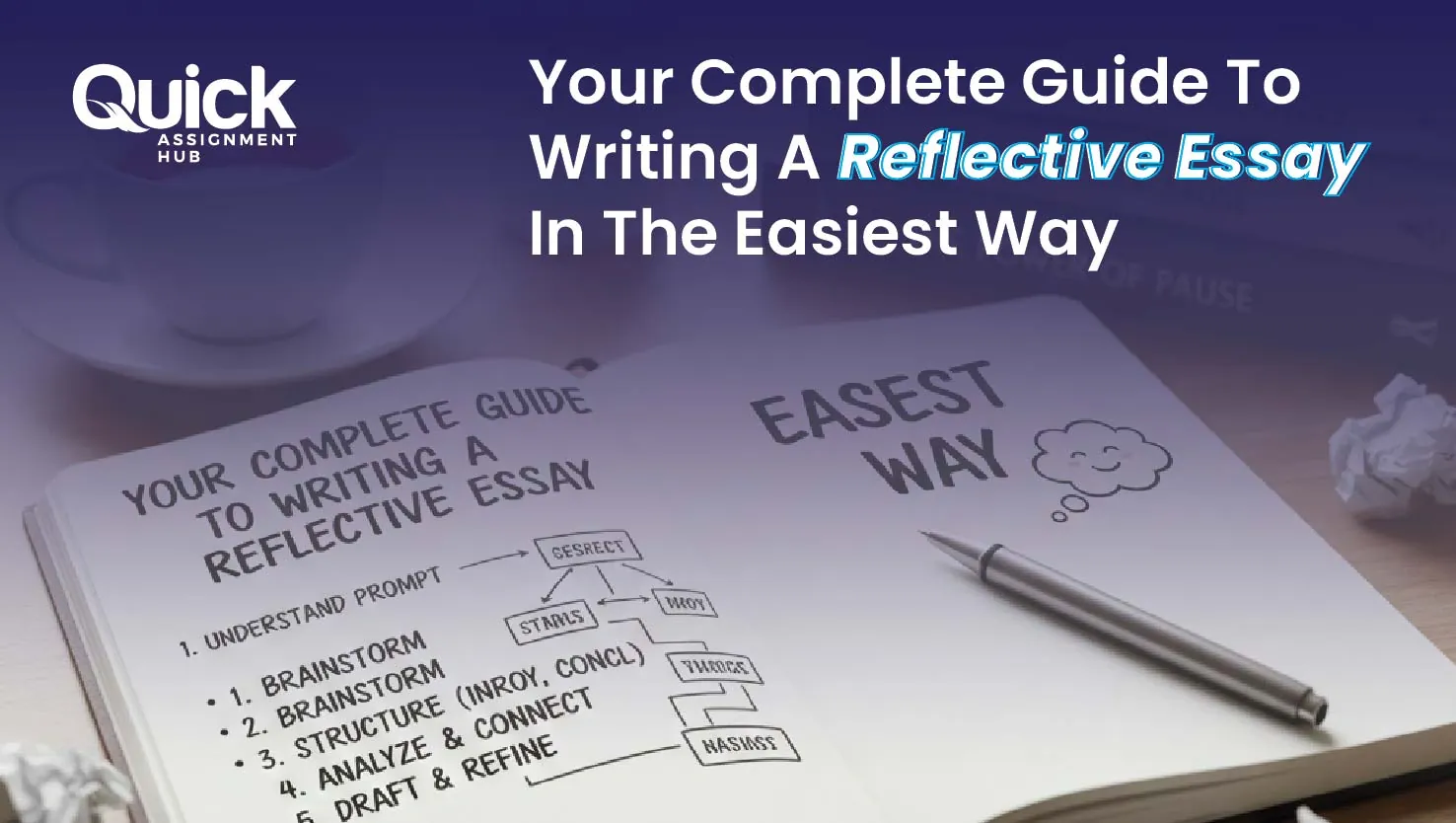
Let us be honest, we all have been there once, asked to write about a personal experience in our assignments, but struggle to make it sound academic. That is exactly where writing a reflective essay helps us to transform our experience and emotions into a lesson that is a structured piece of writing.
In this blog, you can explore the answer to - what is a reflective essay, with its purpose, structure and how to start writing one. We also have practical examples and tips on making your reflection even deeper to help you write your next essay.
When you ask “what is a reflective essay?”, the answer can be that it is a type of academic writing that is about examining your personal experience and evaluating how that has shaped your understanding and perspective. Unlike other academic papers, this is introspective, which means it focuses on your own thoughts, emotions and growth throughout a particular event.
You may say that it is a combination of storytelling with analysis, while you can be able to make sure to share your experience at the same time. The reflection of the essay helps you to look back on what experience has taught you. For example, you might want to write about your first presentation that you have given in class and how it has developed your confidence and communication skills.
Reflection is commonly used in fields like nursing, education, psychology and management as it helps to connect theory with practice.
Also read: An Expert Guide On How To Write A Persuasive Essay
Every academic paper has an importance, and so does a reflection. The purpose of a reflective essay is how it can illustrate what you have developed personally and academically.
Through reflection, you can evaluate situations, decisions and outcomes reflecting your critical thinking.
You can become more self-aware by understanding your strengths, weaknesses and emotions.
It connects real-life experience with theoretical concepts for better learning application.
Reflection of the essay is about promoting personal development by identifying lessons that have contributed to your overall growth.
Reflection is a process that supports lifelong learning by helping you understand what you have learnt and how you have learnt it.
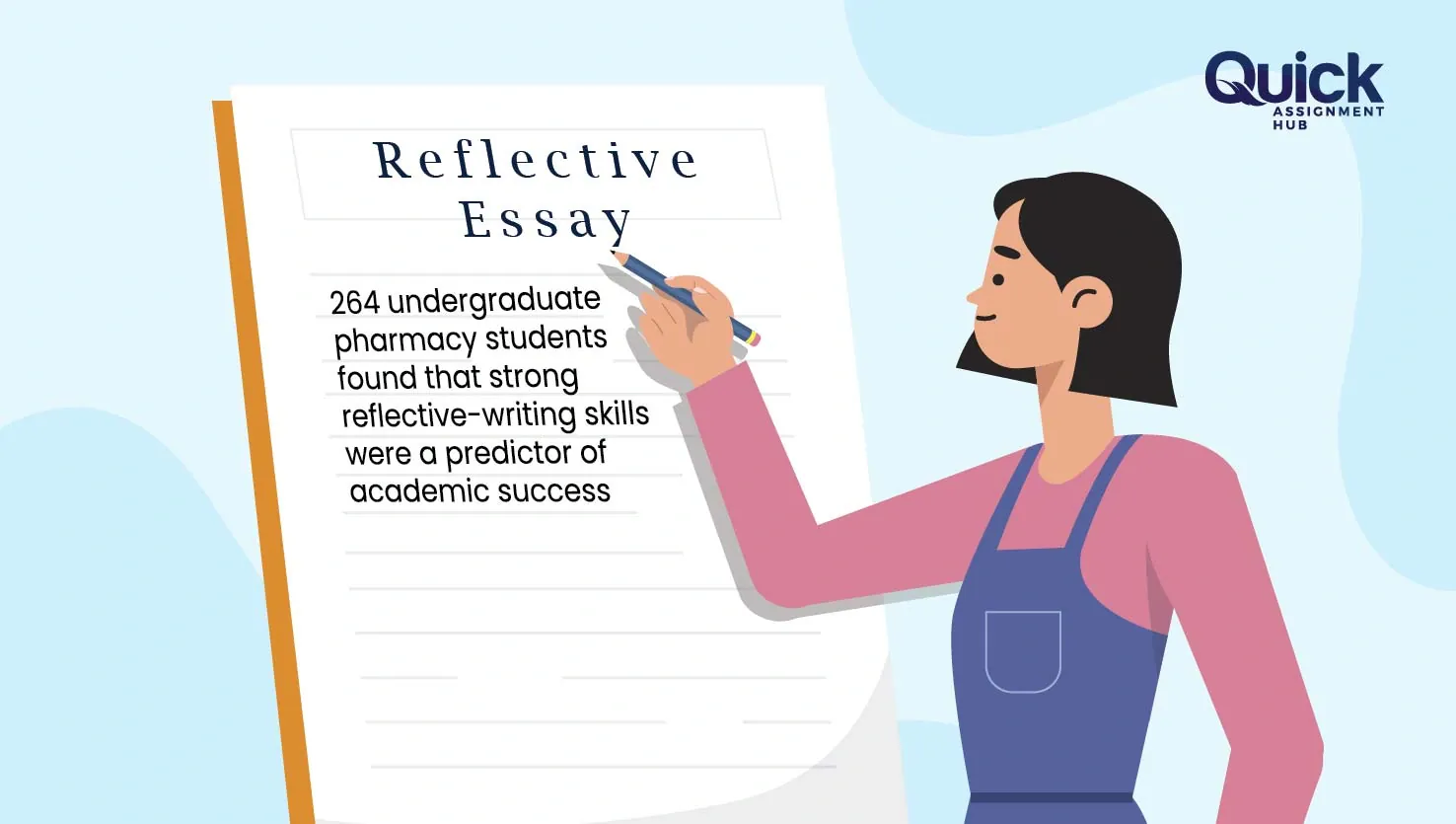
When you are writing an effective reflection, you need to include the following elements:
In the introduction, start by explaining the topic or the event that you are going to reflect on. Set the contacts on when and where it has happened, and briefly explain why it is significant for you.
The next thing is to describe what has happened to you while in that event, without adding any unnecessary details. The main focus must be on the event or the decisions that were relevant to your reflection.
This is the main part of your reflection of the essay. Analyse the situation by answering:
What did you learn?
What emotions did you feel?
What can you do differently next time?
Here you can link your experience with theory or research, displaying how it has reflected your academic learning.
Lastly, add a conclusion where you summarise your insights and explain how this experience has influenced your future actions or decisions.
Starting to write a reflection can feel tricky at first when you are unsure how you can blend personal insights into an academic structure. However, if you are asking for a tutorial on how to start a reflective essay, here are the steps:
Select the correct topic by picking an experience that had a strong emotional or interaction influence on you.
Start with a hook, you can have a conversation, a question or a quote related to your experience.
State your purpose by explaining what the essay can reflect on and why it is significant.
In reflection, you are required to write in first person and use “I” while maintaining an academic tone.
Here is the starting reflective essay example:
“I have stood before the crowd for the first time. I felt that my hands were trembling and my heart was beating first at that time. That presentation taught me more about confidence than any book ever.”
This type of opening can set the tone for a reflection of the essay that feels authentic and engaging.
All your academic papers need a proper format and structure, and so does your reflection. A clear structure can make sure that your essay flows logically and keeps the audience engaged. Wondering how to start a reflective essay in an academic format? Here’s your answer:
Introducing the experience.
State the purpose of your reflection.
Describe the experience briefly.
Analyse what has happened and your emotions.
Connect your reflection to academic theories.
Discuss the lessons that you have learnt.
Summarise the key insight.
Discuss how the experience can impact your future behaviour or thinking.
Many popular reflection models are used throughout the academic reflection essay writing. When you are right academically, it can help you to reflect and provide structure and depth.
Gibbs Reflective Cycle: This is the most used reflective model that has 6 effective stages and supports how to consider every angle of an experience.
Kolb’s Experiential Learning Cycle: This model is focused on learning through experience. It can help you to concentrate on the experience and reflect on the observation.
Schon’s Reflection-In-Action And Reflection-On-Action: It is the perfect framework to reflect on while doing something and after it is done. This is widely used in professional learning environments.
Choosing any of these reflective models can help you to analyse your reflection effectively while maintaining academic style.
Learn more about: Everything You Need To Know About a Diagnostic Essay
We know that you want practical examples for a better understanding, and we hear your queries. Here is a reflective essay example that can help you to practically understand what you need to include.
“In my first semester at university, I volunteered for a lead group project. In the initial stage, I struggled to manage tasks effectively and had time management issues. However, after reflecting on this, I realise that I was hesitating due to my fear of conflict. Using the Gibbs model, I have analysed my experience and learnt that clear communication and trust are key leadership traits. This experience has taught me to approach teamwork more confidently, applying strategies like setting clear roles and deadlines.”
We hope that this practical example can show you how personal growth and academic reflection can go hand in hand in your essay.
A reflective essay is not just limited to classroom assignments, but it can support self-assessment and improvement anywhere.
In the nursing and healthcare field, it is used to analyse patient interaction and improve professional practice.
In education, you can evaluate teaching methods and student learning.
For business and management, you can evaluate decision-making, leadership and ethical dilemmas.
In creative fields, you can reflect on artistic processes or project outcomes.
So whether you are a student or a professional, reflection can only be instrumental for yourself.
Here are some red flags that you need to be aware of while writing a reflection.
Don't focus on telling a story, but explain its significance.
Always connect your experience with academic theories.
Avoid having a lack of structure, maintain clarity and coherence.
Go beyond what happened to why it matters.
A reflective essay is your chance to connect your personal experience with academic learning by analysing what you learnt and how it changed you. You can develop self-awareness and critical thinking abilities for yourself. Writing a reflection regularly can enhance your ability in learning from real-life situations.
Reflection writing takes time to master, and if you need help with it to write for you, then don’t be shy and give us a call. Our services are always there for you, whether it is a reflection paper or an essay. Quick Assignment Hub offers Essay Help whenever you need and wherever you need.
Your First Order
Get 20% OFF!


















© Copyright Quick Assignment Hub All rights reserved.


