




15,893
Deliverd orders

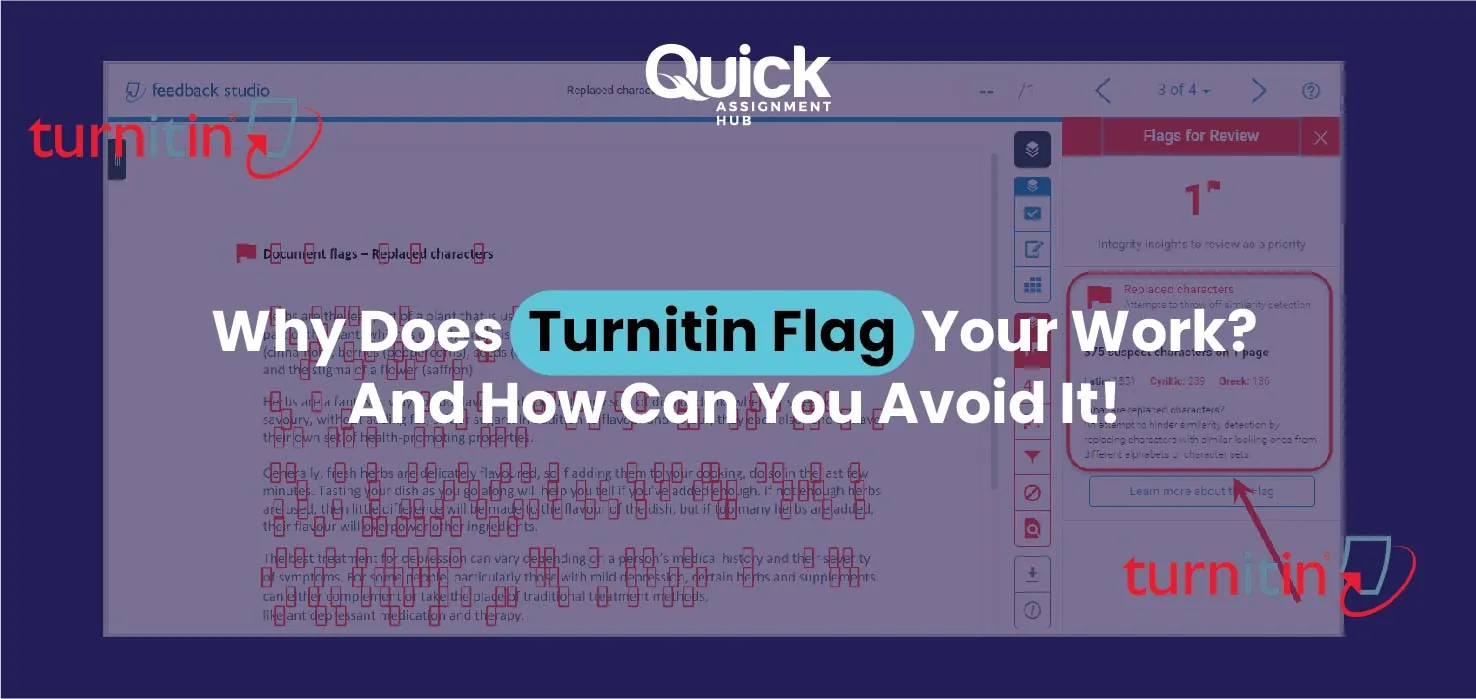
Writing and submitting your academic assignment can be a big challenge for you. Especially if, after completing your assignment, it get flagged. These flags are triggered by the software's detection of textual overlaps or plagiarism.
Want to know the reasons behind your high Turnitin similarity scores? Then you are at the right place. We will tell you everything you need to know about a good and a bad Turnitin similarity score. Follow these effective ways to reduce your similarity scores without stressing over flags.
Turnitin does not itself accuse you of plagiarism. Instead, it focuses on detecting the textual similarity by matching your work with academic journals and student papers. The Turnitin similarity score is the percentage by which your academic assignment is similar to those of other sources. Here are the common reasons that your research paper might get flagged -
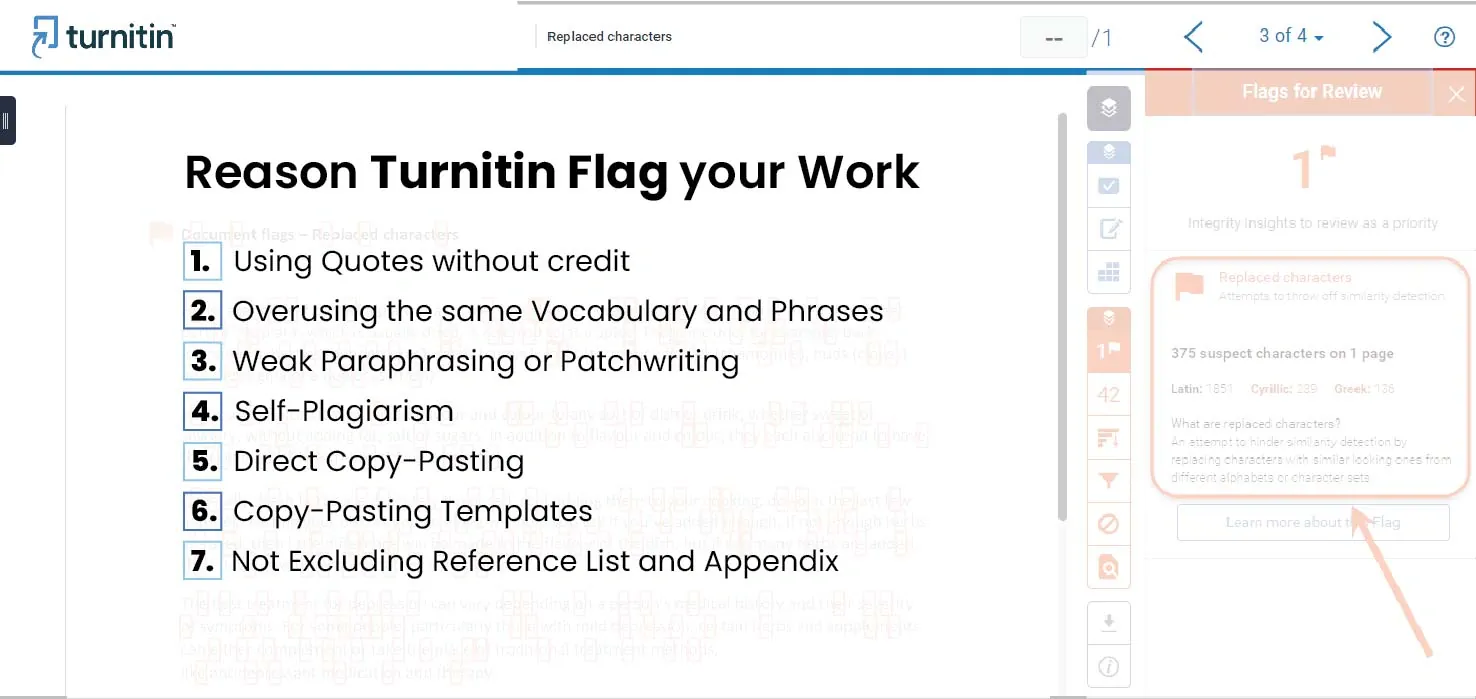
Using Quotes Without Proper Attribution: If you are quoting long paragraphs or writing word-for-word, even while mentioning the source, that will greatly add to the similarity percentage. Turnitin highlights all the matches, including the quotes.
Overuse of Vocabulary and Standard Phrases: Vocabulary and phrases are the two parts that you need to maintain in academic writing. Sometimes, reoccurrences in phrases match the similarity, leading to high similarity.
Weak Paraphrasing or Patchwriting: Replacing only one or two words or shuffling the sentences would not work. You need to work on it and properly paraphrase while keeping the meaning intact.
Reusing Your Own Past Work = Self-Plagiarism: If you have already submitted your earlier academic work and reuse the same topics or data repeatedly, it will turn into self-plagiarism.
Direct Copy-Pasting From Online: Any direct copy-paste from existing websites, articles, or online data would be considered plagiarism.
Using Templates: Beginning with the same outdated outline and similar methodological description results in repetitive methods, which results in getting flagged.
Reference List and Appendix Materials: Reference lists in academic papers follow a standard format, often matching similar entries in the Turnitin database. It will be flagged if you do not extract your bibliography or reference list.
Not every match in Turnitin flag is suspicious; the key is context and proportion -
| Acceptable matches | Problematics matches |
|---|---|
| 1. Short phrases, technical terms, and discipline-specific jargon | 1. Long phrases copied verbatim without attribution |
| 2. Properly sighted quotations or brief excerpts | 2. Poor or lazy paraphrases that follow the original too closely |
| 3. Matching a bibliography or reference list (if excluded | 3. Self-plagiarism that reuses a prior submission without disclosure |
| 4. Standard or required template text (if minimal and expected) | 4. Multiple unscited matches or clustered blocks of matching texts |
Hence, a good and bad Turnitin similarity score is not just about the number; more than that, it is about what is matched. A low similarity score can hide a long, uncited copy-paste chunk; however, a higher score in similarity will be acceptable if all matches are appropriately cited.
How much similarity is allowed in Turnitin? There is no universally accepted threshold or percentage fixed by universities or professors. However, some research suggests that -
Many universities consider a similarity of below 15 - 20% safe or acceptable.
In some cases, up to 25% similarity or slightly more is also acceptable, depending on the assignment's nature.
However, anything over 25 - 30% will trigger academic integrity and questioning by your profession.
There are many assignments, for example, in financial subjects, where a higher similarity score is accepted due to numerical and equations that cannot be changed. So, the similarity score varies depending on the assignments and your professor's expectations. In that case, you need to converse with your instructors before you start working on your project to maintain academic integrity.
You need to note that Turintin does not label your work as plagiarism. It is the professors who examine it based on academic judgment. The colours of Turintin, such as blue, green, yellow, orange, and red, simply represent the ranges of matching texts.
Paraphrase With Intent: Do not just swap with any synonyms; read the original, and make sure that the meaning is intact by just putting in words in your own way.
Use Quotations Sparingly: Only quote when the exact words are essential; if not, use a short quote, and always use quotation marks or citations.
Write in Your Own Words: Instead of copying the exact words, use your thoughts and express the arguments in your own words. Leverage your creativity this way and keep the paper fresh with new thoughts.
Proper Citation: Whenever you borrow data, facts or beyond common knowledge, you must cite the source in-text and put it in the reference list properly.
Check Draft Daily: You can check your draft every day to ensure you are not repeating any kind of words or information in the same way.
Rewrite Repetitive Sections: Background, information, definitions, and methodology can be standard across your academic paper, so rewrite them differently each time.
Exclude Bibliography: Make sure you have excluded the bibliography apart from the word count and primary research, as excluding the bibliography will reduce the chance of similarity.
Use Transitions and Single Phrases: Embed quotations or paraphrases in your own words. For example, "As per the viewpoint of Robin (2023),......" or "As stated by Vivi (2024)......". This format will help to integrate rather than merely pasting.
Change Sentence Structure: Break the long sentences and combine the short ones, change the order, or use passive and active voice based on the sentence structure.
Seek External Assistance: Are you the one who struggles to express your idea in your own voice? Then do not worry, as seeking assignment help will help you understand it more.
A Turnitin flag is a sign of overlapping for review; it does not itself assign blame. So accepting the similarity may include short quotations, sharing discipline vocabulary, or correctly referencing sources. Learning to fix similar content will help you master your academic writing. Remember that your focus should stay in maintaining the similarity score below the 15 - 20%.
Need someone else to give a hand in helping you to pass this process? Our services are always here for you. Quick Assignment Hub’s professional assignment expert drafts assignment from scratch using only valid and credible sources which uphold the authenticity of the assignment. So that you get a no-plagiarised, researched assignment in no time.
Your First Order
Get 20% OFF!








© Copyright Quick Assignment Hub All rights reserved.


